5 Signs Your Boat Needs Gel Coat Restoration
Boat gel coat restoration repairs and renews the protective finish on a fiberglass boat when it becomes faded, chalky, scratched, stained, or difficult to clean. Look for oxidation, loss of shine, discoloration, surface cracks, and recurring stains. Early restoration can improve appearance, protect the laminate, and help prevent more expensive repairs.
What Is Gel Coat?
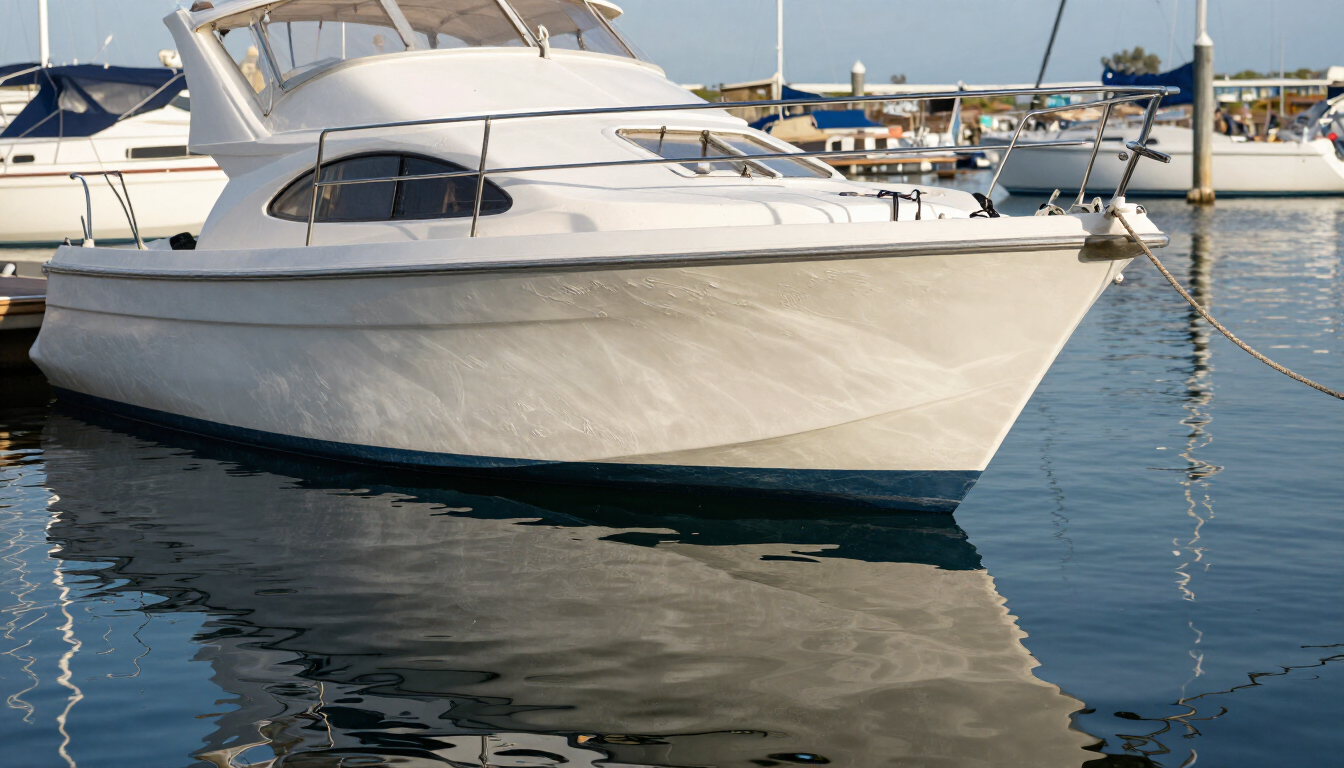
Gel coat is the pigmented, durable outer layer applied to many fiberglass boats. It provides color, gloss, and a first line of protection against sunlight, salt, moisture, dirt, and everyday contact with docks or equipment.
Although gel coat is tough, it is not indestructible. Ultraviolet exposure gradually breaks down its surface. Repeated washing, harsh chemicals, rubbing against bumpers, and improper storage can accelerate the process. Once the surface loses its smooth protective quality, water and contaminants can become harder to remove.
Gel coat restoration typically involves cleaning, oxidation removal, compounding, polishing, and applying protection. The correct process depends on the condition and thickness of the remaining gel coat.
What Are the Signs Your Boat Needs Gel Coat Restoration?
These five signs indicate that polishing or restoration may be more appropriate than routine washing:
- The finish looks dull or chalky. A healthy gel coat reflects light evenly. If the hull looks cloudy, powdery, or faded, oxidation is likely present.
- Color has become uneven. Patchy fading, especially on exposed topsides, shows that UV damage has affected the finish at different rates.
- The surface feels rough. Run a clean hand over the hull. A gritty or dry texture can indicate oxidized gel coat, embedded contamination, or mineral buildup.
- Stains return quickly. Waterline marks, rust-colored streaks, and dark spots that reappear after cleaning may be sitting in a compromised surface rather than on top of it.
- Minor scratches and scuffs are increasingly visible. Light surface marks can stand out when gloss and color have deteriorated.
A boat may show one or several of these symptoms. The more widespread the damage, the more likely it is that a full gel coat restoration service will provide a better result than a basic wash.
How Can You Tell Oxidation From Serious Damage?
Oxidation usually affects the appearance and texture of the gel coat without exposing the fiberglass underneath. A professional can often improve moderate oxidation through controlled compounding and polishing.
More serious damage may include:
- Deep cracks or spiderweb-shaped fractures
- Chipped or missing gel coat
- Exposed fiberglass strands
- Soft or swollen areas
- Blisters, bubbles, or delamination
- Water intrusion around fittings or hardware
These conditions may require repair before restoration. Avoid aggressive DIY sanding if you are unsure what you are seeing. Removing too much gel coat can make the surface thinner and create additional problems.
Why Does Gel Coat Fade and Oxidize?
The main cause is long-term ultraviolet exposure. Sunlight breaks down the binders and pigments at the surface, leaving behind a dull, porous layer. Oxidation can happen faster when a boat is stored uncovered or regularly exposed to intense summer sunlight.
Other contributing factors include:
- Saltwater and mineral deposits
- Bird droppings and organic staining
- Abrasive cleaners or brushes
- Repeated dock contact
- Neglected waxing or sealant
- Poor winter storage conditions
That is why two boats of the same age can have very different finishes. Maintenance history, storage, climate, and use all matter.
Can You Restore Gel Coat Yourself?
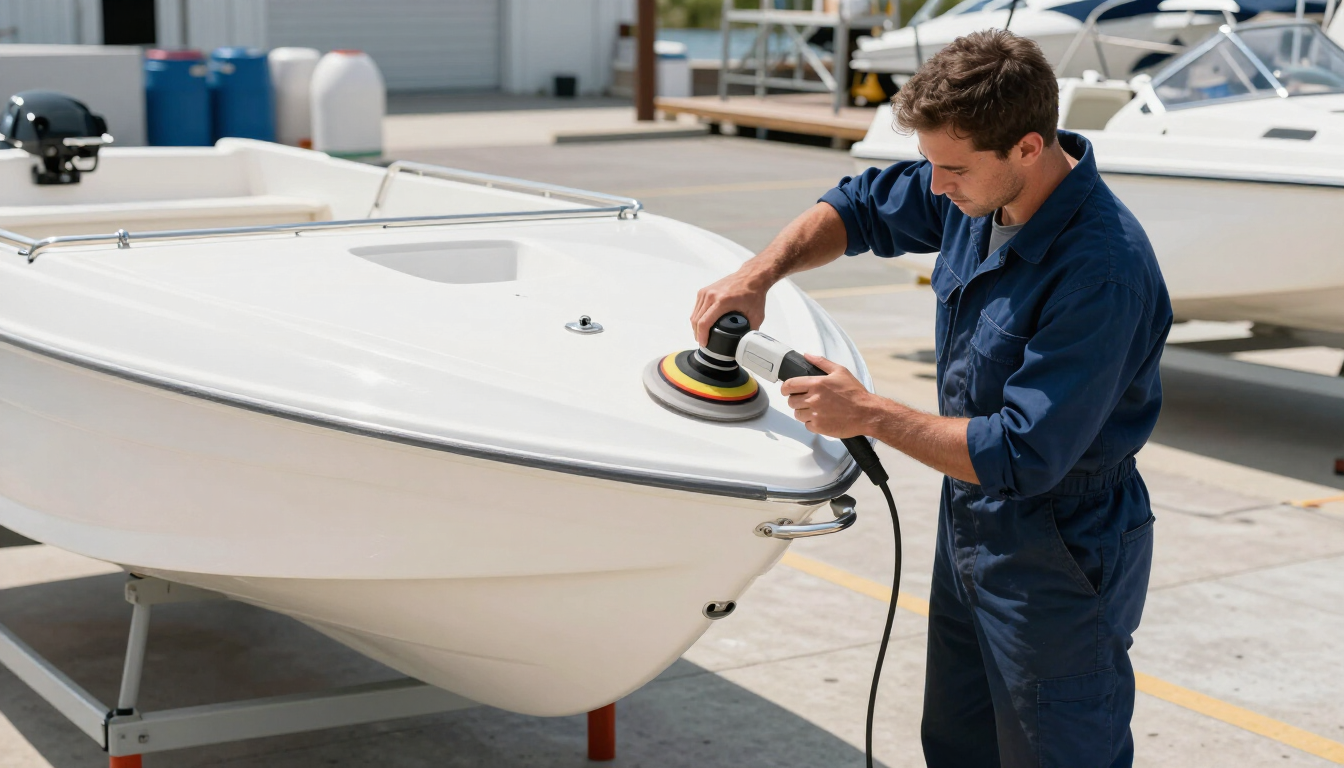
Light oxidation can sometimes be improved with marine compound, polish, appropriate pads, and a dual-action machine. However, DIY work has limits. The wrong product, speed, pressure, or pad can leave swirl marks, burn the finish, or remove more material than intended.
Before starting, assess:
- Whether the discoloration is surface-level
- How much gloss remains
- Whether the hull has previous paint or repairs
- If cracks, blisters, or exposed fiberglass are present
- Whether you have the equipment and time to work evenly
A small test section is essential. If a test area does not regain color and gloss after cleaning and controlled polishing, the damage may be too advanced for a simple restoration. Professional service is also sensible for large hulls, dark colors, difficult stains, or high-value boats.
For related upkeep, combining restoration with exterior detailing can help address trim, hardware, rails, and other visible surfaces at the same time.
What Does Professional Gel Coat Restoration Include?
A typical professional process may include:
- Inspection: The technician identifies oxidation, stains, scratches, cracks, previous repairs, and areas needing special care.
- Surface preparation: The boat is washed and decontaminated so grit does not become trapped beneath polishing tools.
- Oxidation removal: Compounding or wet sanding may be used when appropriate for the condition of the gel coat.
- Polishing: Finer products refine the surface and restore clarity, color, and reflectivity.
- Protection: Wax, sealant, or another marine-grade protectant helps slow future UV and environmental damage.
- Final review: The finish is checked in different lighting to identify unevenness or missed defects.
Not every boat needs every step. A careful assessment prevents unnecessary abrasion and helps match the service to the actual condition of the surface.
Restoration Benefits
Restoring gel coat can deliver more than a better-looking boat. Key benefits include:
- Improved color and gloss
- Easier cleaning after use
- Better resistance to future staining
- Reduced appearance of light oxidation and scuffs
- Improved presentation before selling or launching
- Additional protection from UV exposure and moisture
Restoration cannot correct structural fiberglass problems or permanently remove deep gouges. It is most effective when the gel coat is worn but still substantially intact.
When Should You Schedule Gel Coat Restoration?
Schedule an evaluation when dullness, chalking, roughness, or staining covers a noticeable portion of the boat. It is especially useful before the boating season, before listing the boat for sale, or after removing a cover and finding prolonged sun exposure.
Do not wait for the surface to become severely faded. Moderate oxidation is generally easier to improve than a finish with widespread cracking, exposed laminate, or deep staining. After restoration, regular washing with marine-safe products and consistent protection can extend the result.
Storage also matters. Covered, ventilated storage reduces UV exposure and helps prevent contaminants from remaining on the surface. If you need a broader maintenance plan, review available storage options .
Frequently Asked Questions
How often does a boat need gel coat restoration?
There is no universal schedule. Many boats benefit from evaluation every one to three years, depending on sunlight, storage, climate, use, color, and maintenance. Dark finishes often show fading sooner than light finishes.
Is gel coat restoration the same as painting a boat?
No. Restoration renews the existing gel coat through cleaning, abrasion, polishing, and protection. Painting adds a new coating and may be considered when the original gel coat is too thin, damaged, or extensively repaired.
Can gel coat restoration remove deep scratches?
It can reduce or remove some light surface scratches. Deep scratches that reach the fiberglass or create a visible groove usually need gel coat repair before polishing.
How can I get a professional assessment?
Review the Gel Coat Restoration service, then request a free estimate with details about your boat’s finish, storage, and visible damage.
The Bottom Line
Your boat likely needs gel coat restoration when its finish is dull, chalky, rough, unevenly faded, or difficult to keep clean. These signs usually point to oxidation or surface wear, while cracks, blisters, and exposed fiberglass require additional repair. Early evaluation can protect the remaining gel coat and improve the boat’s appearance before damage becomes more extensive. Inspect the hull in good daylight, avoid aggressive DIY sanding, and compare the condition with the appropriate professional service. Then schedule an assessment or request an estimate based on the surface damage and your maintenance goals.